Buying guides
Acetate vs metal glasses frames: choose your everyday feel
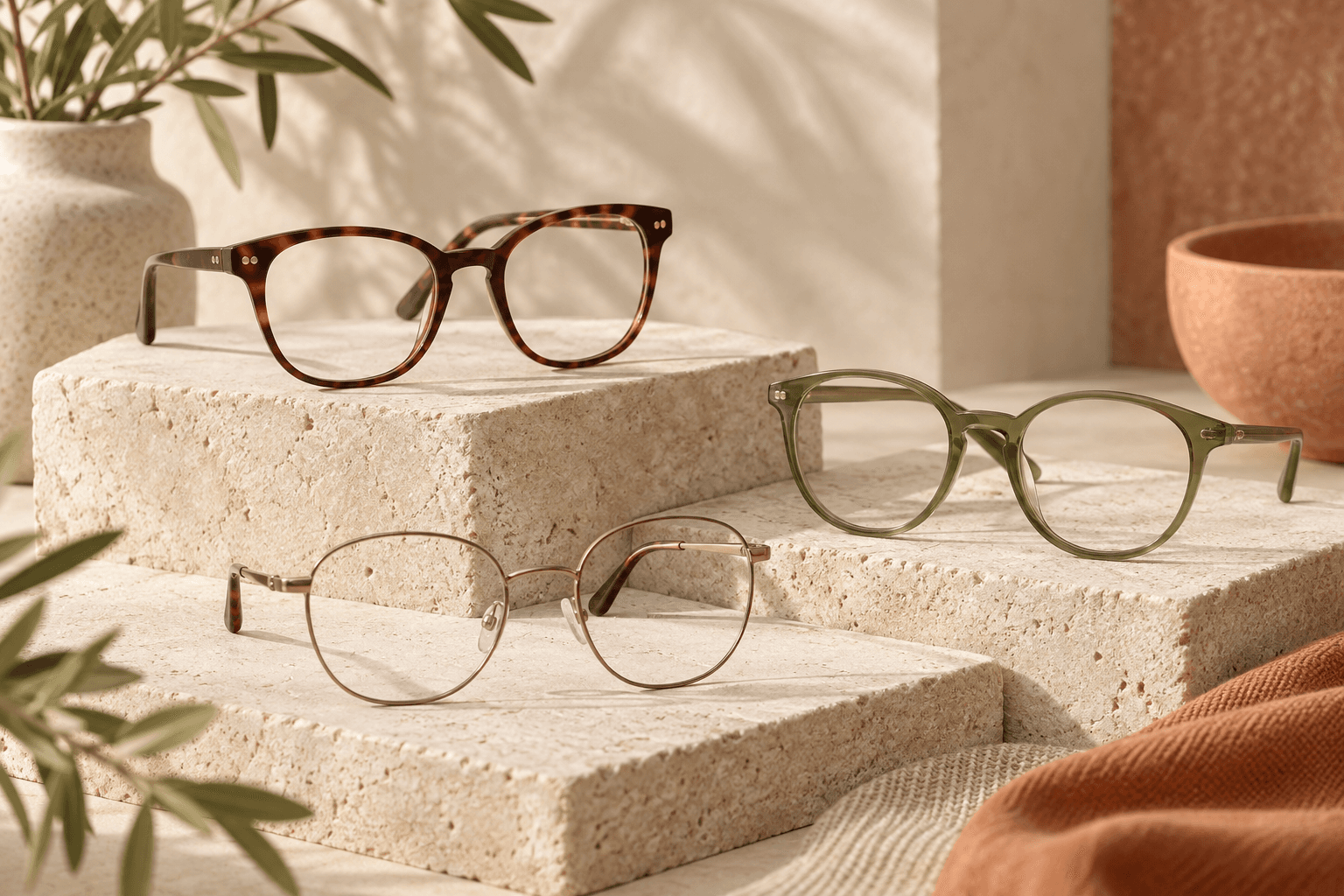
Acetate frames can bring colour and a substantial outline; metal frames can offer a finer line and a different bridge arrangement. Neither description tells you which pair will be comfortable during a long day in Bangladesh. Compare complete frames with your intended lenses, rather than treating a material name as a promise about weight, strength or fit. The better choice is the pair that works with your face and routine.
Ask what the frame is actually made from
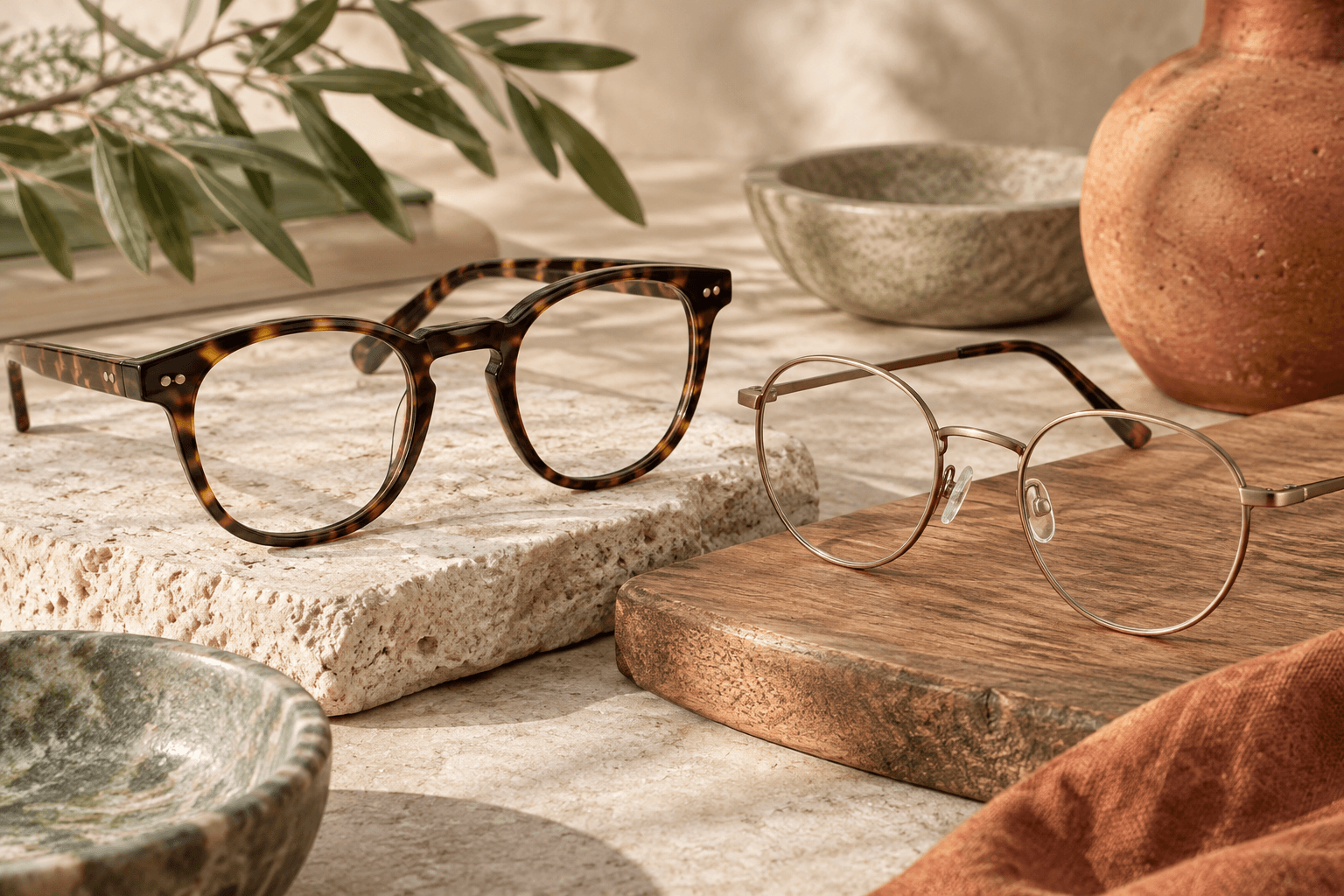
Acetate is a particular frame material, not a synonym for every plastic frame. Likewise, metal is a broad category. Warby Parker's materials guidance distinguishes acetate from metals such as titanium and stainless steel, and notes that frames can combine materials. Read the product specification instead of identifying the construction from a photograph or from how expensive the finish looks.
Ask about the front, temples, bridge and the parts that touch your skin. A frame may have an acetate front with metal arms, or a metal front with covered temple tips. Write down the exact description supplied by the seller. If the listing only says premium material, that leaves an unanswered question rather than giving you a reason to assign it to a category yourself.
Compare visual weight separately from physical weight
A thick tortoiseshell front can make a deliberate statement even in a quiet outfit. A fine metal rim may feel less noticeable in the mirror while its bridge and finish add detail. Those are visual effects. They do not reliably tell you the weight of the finished glasses, because the specific frame construction and lenses also matter.
Try both with the clothes you wear most: a work shirt, university outfit or everyday panjabi. Take photographs from the same distance with the same lighting. Then put the phone away and notice the physical experience. A frame can be exactly the right level of boldness for your style and still fail the comfort comparison; you are allowed to choose a different model in the same material.
Look closely at the bridge
Check whether the model has a moulded bridge or separate nose pads. Adjustable pads are a feature available on many metal frames, but you should verify the actual design. Warby Parker describes them as allowing the fit to be fine-tuned. Their presence does not guarantee comfort, and an acetate frame is not automatically unsuitable simply because it uses a different contact surface.
Wear each pair long enough to notice where it rests. Look down, talk and smile. Ask the fitter about any pressure, slipping or cheek contact you observe. A useful explanation describes what can reasonably be adjusted on that model. If the response is simply that every frame needs breaking in, keep comparing instead of assuming discomfort will disappear after purchase.
Make skin sensitivity a specific materials question
If you have a known sensitivity to a metal, tell the seller exactly what you need to avoid and request component-level information. Warby Parker notes that small metal parts can still be present on plastic-front frames and that the word hypoallergenic is not a guarantee against a reaction. Check exposed hardware as well as the main frame material.
Do not diagnose a new patch of irritated skin by deciding that all metal is unsuitable or all acetate is safe. Record where the contact occurs and have persistent irritation assessed. That gives your next purchase a clearer requirement. It also avoids paying for a fashionable material description while overlooking the nose-pad arm or temple section that actually touches you.
Budget for the finished glasses
Ask for a complete quote with the frame, chosen lenses and any additional work shown separately. For a daily pair, ask whether the optician sees any fit or lens-compatibility concerns before the order is final. A low frame-only price and a higher complete-glasses price cannot be compared fairly without knowing what each includes.
Check the care instructions and available after-sales fitting too. Choose a case that closes around the pair without pressure and carry it on the commute. If you are equally happy with an acetate and a metal finalist, select the one whose fit, specification and total price are clearer. Your next pair can have a different material; this purchase does not require a lifelong allegiance.
Quick questions
Are metal frames always lighter than acetate?
No. Compare the actual models and, where possible, the finished glasses with your lenses. Frame dimensions, construction and the lenses all contribute to what you wear.
Is acetate automatically better for humid weather?
Do not choose from the material name alone. Compare fit and contact points, ask for care instructions and check the exact construction. A well-chosen model in either category may suit your routine.