Buying guides
Aviator vs square sunglasses: compare the fit, then the look
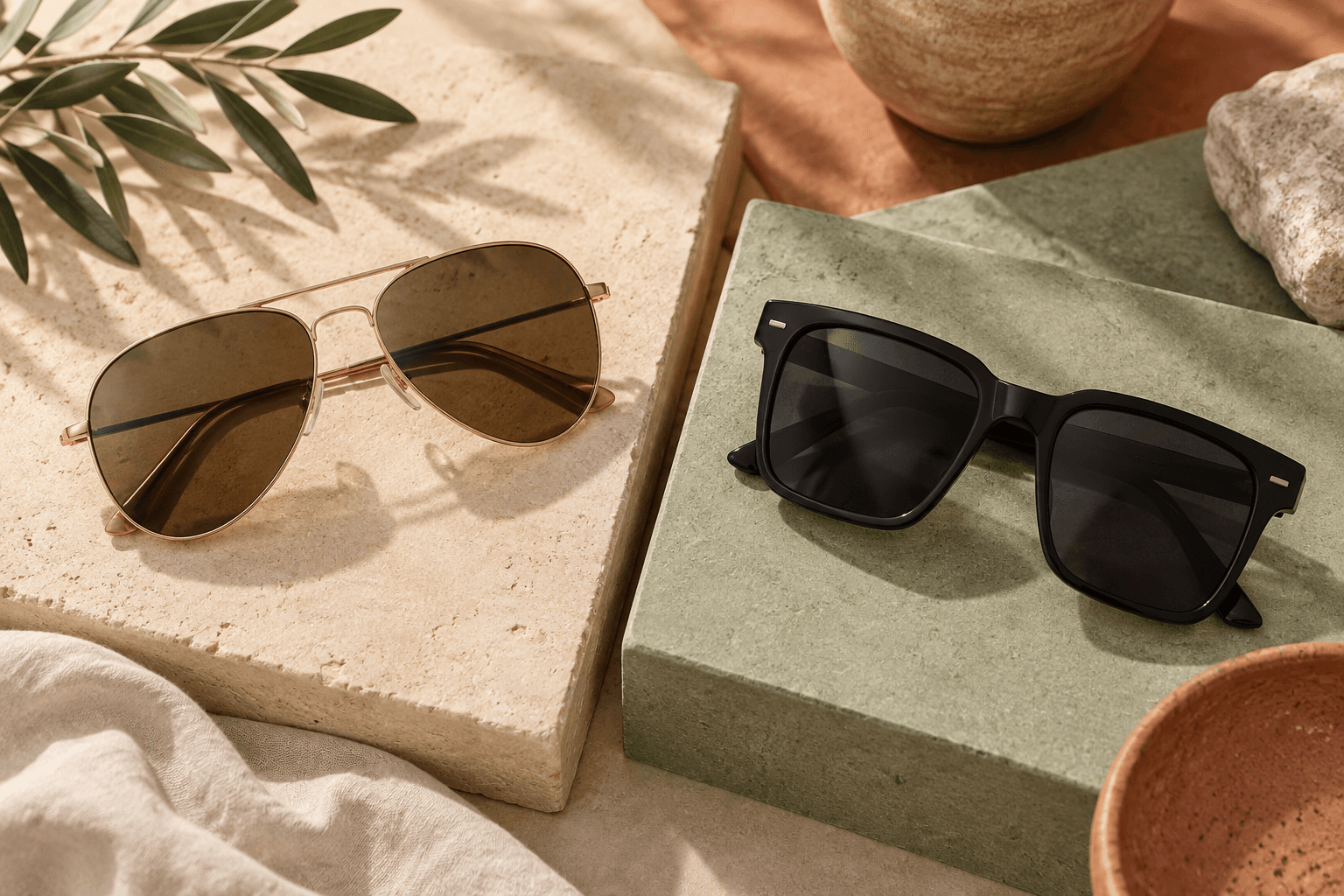
Aviators and square sunglasses can both work with a shirt, a panjabi or a weekend T-shirt. Their real difference is how they draw a line around your face. An aviator often brings a deeper, tapered lens and a visible double bridge; a square style often makes a stronger horizontal statement. For everyday use in Bangladesh, try the shapes at comparable sizes before deciding that one category suits you better.
Compare like with like
A large gold aviator and a narrow black square frame differ in size, colour, thickness and shape at once. That makes the comparison hard to read. Start with two pairs that have a similar overall width and lens darkness. Then look at the outlines. You may discover you like an aviator shape but prefer a darker finish, or enjoy a square front once it is a little less wide.
Names describe families, not fixed measurements. Some aviators have a softened rectangle instead of a pronounced teardrop. Square sunglasses may have rounded corners, thick rims or a light metal construction. Keep photographs of the actual models on your shortlist. A search result labelled aviator is not enough information to predict what arrives in the box.
Let lens depth meet your cheeks
Look first at the bottom edge while your face is relaxed, then smile. A deep aviator lens can sit near the cheek on one wearer and clear it comfortably on another. A square lens can do the same if it is tall or sits low. Reject the idea that one shape automatically solves cheek contact; the bridge and position of the whole frame matter too.
Try looking down as if checking a message, then turn your head naturally. The frame should not repeatedly shift into a new position. If a pair sits badly, ask whether adjustment is realistic before paying. Do not bend the bridge or nose-pad arms as a fitting experiment. For an online order, compare dimensions with glasses you already wear and check the seller's exchange conditions.
Decide how much outline you want
A thin metal aviator can leave more of the face visually open, although a double bridge adds detail near the brow. A thick black square frame often reads more graphic. These are starting impressions rather than personality labels: aviators do not require a rugged wardrobe, and square frames do not make an outfit automatically formal.
Use three outfits you actually wear. For example, compare both pairs with your office shirt, a relaxed Friday panjabi and a cotton T-shirt. Take a front view with the same lighting and camera distance. If one pair works beautifully with a single outfit but feels awkward with everything else, decide whether you are buying an occasional accessory or your main sunglasses.
Treat the lens specification as its own decision
Shape does not verify sun protection. The US National Eye Institute advises choosing sunglasses marked for 99–100% UVA and UVB protection or UV400. Its guidance also distinguishes polarization as a feature that reduces reflected glare. Ask for the UV specification of the exact pair you are considering, whether its frame is metal, acetate, square or teardrop.
Make a short comparison note for each finalist: UV claim, polarization if specified, dimensions, price and return conditions. An unexplained word such as premium should not fill an empty specification field. When a detail is missing, ask the seller to confirm it in writing. A pleasing reflection in a product photograph cannot answer a question about the lens.
Finish with your daily accessories
Wear the cap or headphones you use during your commute when trying the finalists. Check whether the arms compete for space behind the ears. Carry the folded pair in its intended case and see whether that case fits the bag you actually take out. Deep lenses and broad fronts can require more storage room than the narrow optical glasses you are used to carrying.
If both pairs fit, let preference settle the comparison. Choose aviators if you enjoy the tapered lens and bridge detail; choose square frames if the straighter outline feels more at home in your wardrobe. If neither remains comfortable during a proper try-on, change the size or model. You do not have to make a popular shape work simply because it photographs well on someone else.
Quick questions
Are aviators only for certain face shapes?
No. Try the actual frame and check width, bridge position and cheek clearance. A face-shape label cannot tell you how a particular aviator will sit or whether you will enjoy its proportions.
Do square sunglasses provide better UV protection?
The outline alone does not establish UV protection. Check the exact lens specification, then assess how the complete frame fits. Either shape can be a candidate when those details meet your needs.