Everyday care
Do you need sunglasses on cloudy days in Dhaka?
A grey morning can make sunglasses feel unnecessary, especially when you are already carrying an umbrella. But the view from your window does not tell you the ultraviolet level outside. Sunglasses with verified UV protection can still be useful on cloudy days in Dhaka. The practical decision combines the day's UV forecast, your time outdoors and lenses that let you see your surroundings comfortably.
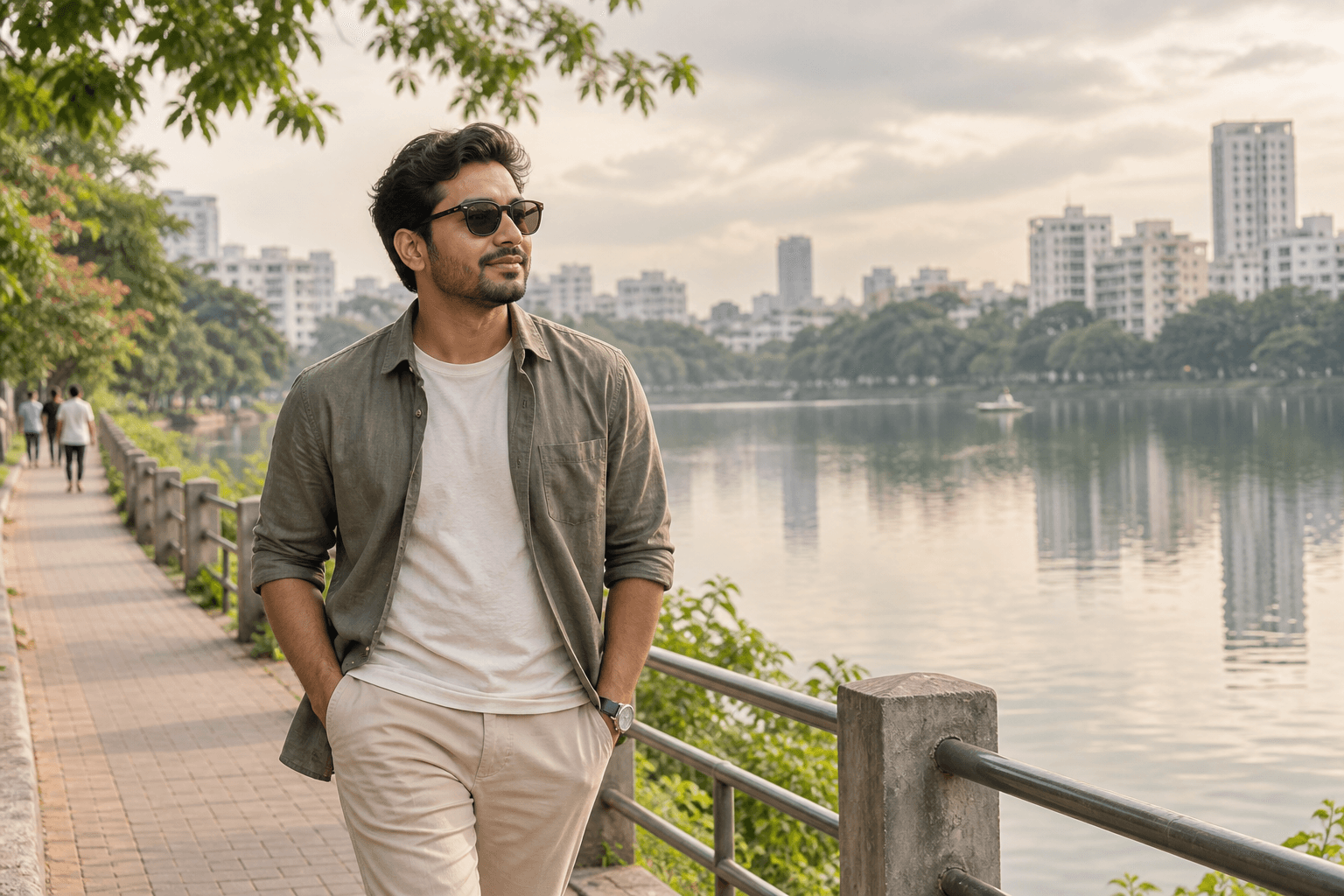
Cloud cover is not an on-off switch
WHO explains that clouds generally reduce UV exposure, but thin or light clouds may have little effect and can sometimes increase UV through scattering. Temperature and the brightness you notice are not reliable substitutes for a UV reading. That does not mean every cloudy day has a high UV Index; it means the colour of the sky cannot settle the question by itself.
For a Dhaka routine, translate that distinction into one small habit: check the UV forecast when you check for rain. A damp morning, a cooler breeze and a long outdoor lunch can happen on the same day. Plan for the time you expect to spend outside, including the walk to transport and the wait before it arrives, rather than only the destination.
Read the UV forecast for the right place and time
Use a weather service or UV app that clearly identifies your location and the forecast date. Look for whether the number is the current reading or the day's predicted maximum. WHO notes that daily UV reports commonly show the maximum, and recommends sun protection when the UV Index reaches 3 or above. Sunglasses are one part of that protection alongside shade, clothing, a hat and sunscreen.
Do not copy a number from an old search result into your daily plan. This article does not assign a fixed UV level to Dhaka: the useful number is the one for your outing. If you are leaving the city for a weekend, update the location too. Save the forecast if mobile data may be inconvenient, but check again when plans or conditions change.
Separate UV protection from how dark a lens looks
A heavy tint may feel excessive beneath rain clouds. The FDA explains that lens darkness does not establish UV protection and that lighter tints can offer the same UV protection as dark ones. Choose a clearly stated UV400 or 100% UV protection specification, then consider the tint and its suitability for the setting. Asking about both is more useful than requesting the darkest pair available.
Try the sunglasses in the kind of light you intend to use them in. You should be able to make sense of steps, signs and ordinary surroundings. If the tint makes a dim space difficult to navigate, remove the sunglasses in a safe place and use the glasses you need for that setting. Carrying a case makes transitions easier than balancing a pair on your head or in a shirt pocket.
Make the habit fit a normal workday
Keep a protective case in the bag you take to work or class so the decision is not made at the front door each morning. Put the sunglasses away when they are unnecessary and bring them out when the setting calls for them. This is a more flexible routine than deciding that the entire monsoon season belongs to either sunglasses or no sunglasses.
Consider the gaps in the journey. You may leave an apartment through a covered entrance, walk along an exposed stretch, wait under a small awning and later cross a campus courtyard. When the forecast calls for sun protection, look for shade and adjust timing where practical. A pair of sunglasses is not a reason to ignore those other choices or extend an outing you had planned to keep short.
Check the pair you already own
Find the model information, packaging or receipt for your current sunglasses. Is the UV specification stated for that pair, or are you remembering a general brand advertisement? If the information is missing, ask the seller for the exact product details. You may not need a new frame at all; you may simply need a clearer answer about the one in your case.
If you are shopping, compare the UV specification, comfort and usability before the finish. Choose something you can carry without fuss and wear with ordinary clothes, not just on holiday. A modest pair that fits your routine is easier to remember on the kind of day that starts grey and keeps changing its mind.
Quick questions
Is a cloudy day always a high-UV day?
No. Clouds affect UV differently, so use the current local forecast rather than assuming either high or zero exposure. Check the time and location attached to the UV Index.
Do cloudy days require very dark sunglasses?
No. Tint darkness and UV protection are different properties. Look for a clear UV specification and choose a tint that is suitable for the light conditions and the activity.