Fit & style
Clear vs Black Glasses for Office Wear: Compare the Presence
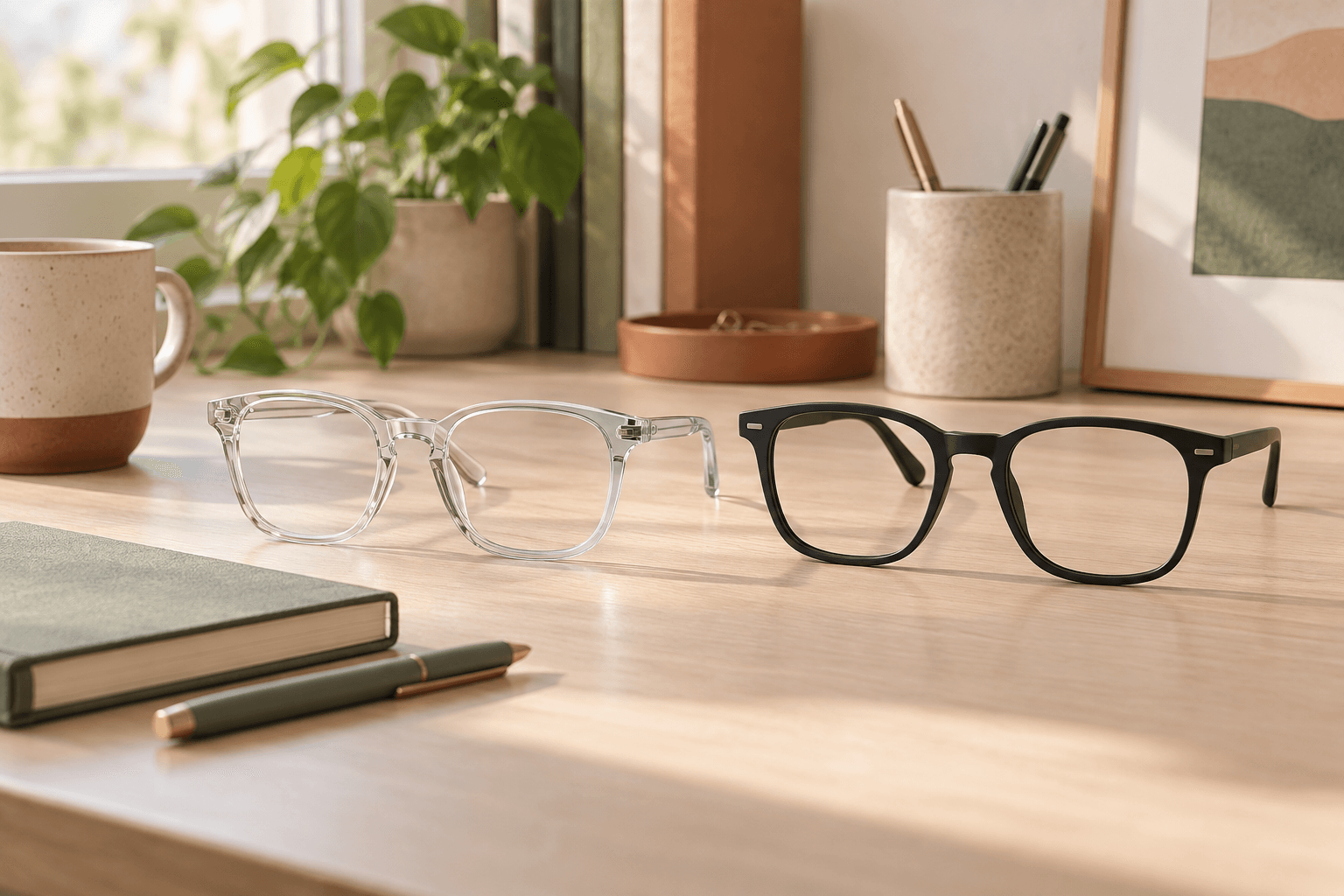
You have found a frame shape you like. Now the colour selector offers two very different possibilities: clear and black. One shows more of the face through the frame; the other draws a firm outline around it. Neither is automatically more professional. For office wear in Bangladesh, the better choice depends on your clothes, your usual lighting and how much presence you want from your glasses. Compare them as part of an ordinary working day, including the video call and the trip home.
Hold the shape steady while comparing colour
If possible, compare clear and black versions of the same model. Otherwise, choose frames with similar proportions. A shallow black rectangle beside a deep clear square is a comparison of shape and colour at once, which can make it difficult to understand why you prefer one.
Start by asking whether you want the glasses to be a visible part of your look or a quieter element. Black often gives you a more definite outline. A clear frame may feel less opaque, though its edges and thickness remain visible. Those impressions depend on the actual design and the light.
See clear frames in more than one light
Look at a clear frame against your face in daylight, under your normal indoor lighting and on your usual work camera. Reflections and the edges can change its appearance, so do not choose it solely because it seems almost invisible on a white catalogue background. A thick crystal frame can still have plenty of visual presence.
Notice the exact tone too. “Clear” can describe different-looking finishes or tints across listings. Check whether the selected colour appears neutral, smoky or warm in the available photographs. If the distinction matters to you and the images are unclear, ask the seller before ordering.
Give black frames an ordinary workday test
Black is worth considering when you like a consistent outline with work shirts, kurtas or a simple scarf. Compare a fine black rim with a heavier one before deciding the colour is too strong. The thickness may be doing more of the visual work than the colour itself.
Look at a full portrait from conversational distance. A close-up of only your eyes can make any rim seem dominant. If you usually wear dark headphones during meetings, include them in the comparison. Decide whether you enjoy the combined look instead of assuming the accessories should fade into the background.
Use your actual work wardrobe
Lay out two or three outfits you repeat. One might be a light shirt and dark trousers; another a printed kurta; another the outfit you wear for client meetings. Compare each frame with those clothes in the mirror or in consistent photographs. A purchase for work should make sense with your real wardrobe.
Do not feel obliged to pick the quieter frame for a formal workplace. Dress expectations vary between offices and roles, and you know your environment best. A bold frame may feel completely natural there. Conversely, a clear one does not need an especially creative workplace to belong.
Consider the small daily habits
Think about when you remove your glasses, where they rest during lunch and whether you keep a case in your work bag. Ask about the maker’s care instructions for the exact frame and lenses. Colour alone is not a durability rating, so avoid assuming black will withstand more handling or that clear will always keep the same appearance.
If you spend your day moving between a desk, meetings and outside errands, choose a pair you are happy to wear through all of them. The colour debate matters less if the physical frame feels distracting. Keep measurements and comfort in the decision rather than allowing a favourite photograph to settle everything.
Make the final choice with one clear reason
Write one sentence for each option: “The clear version feels lighter with my patterned clothes,” or “The black outline is the part I like most.” These are personal reasons, and that is their value. If both work equally well, price, available size and the current purchase terms can help break the tie.
You do not need two pairs just because both look appealing. Start with the one that has the clearest place in your week. Save the other to revisit if your wardrobe or needs change. A useful office frame should feel like a familiar part of getting ready, not a styling problem you must solve before every meeting.
Quick questions
Are black glasses more professional than clear glasses?
There is no universal rule. Compare the exact shape and thickness with your workplace and normal outfits. Both colours can work well in an office when you like the overall result.
Should I choose clear glasses to look better on video calls?
Test them with your actual camera and lighting first. A clear frame still has visible edges and reflections. Compare screenshots taken in the same setup rather than assuming one colour will always photograph better.