Fit & style
Glasses for Small Faces in Bangladesh: Look Beyond Lens Width
You open a product page, choose the smallest lens measurement, and still end up with glasses that seem to take over your face. The problem may be the frame around those lenses: thick rims, wide corners or a bridge that sits differently. When shopping for glasses for small faces in Bangladesh, build your shortlist around the whole frame and your daily routine. A tidy rectangle and a rounded statement frame can both work if their proportions make sense for you.
Start with a frame you actually enjoy wearing
Take out your most comfortable pair, even if the colour is tired or the style no longer excites you. Photograph its front and side, then write down anything printed inside the arm. Add a sentence about what works: it stays in place during your commute, clears your cheeks when you smile, or feels comfortable through an evening class.
Also write down what you want to change. A frame can be narrow enough but visually too deep; another can look delicate while feeling loose. Separating those observations prevents you from buying the same problem in a nicer colour.
Compare the whole front, then the details
The familiar three-number size marking describes lens width, bridge width and arm length in millimetres. It does not directly give the total width of the front. As Warby Parker explains in its measurement guide, that overall width includes the frame itself. Two designs with identical lens measurements can therefore make quite different first impressions.
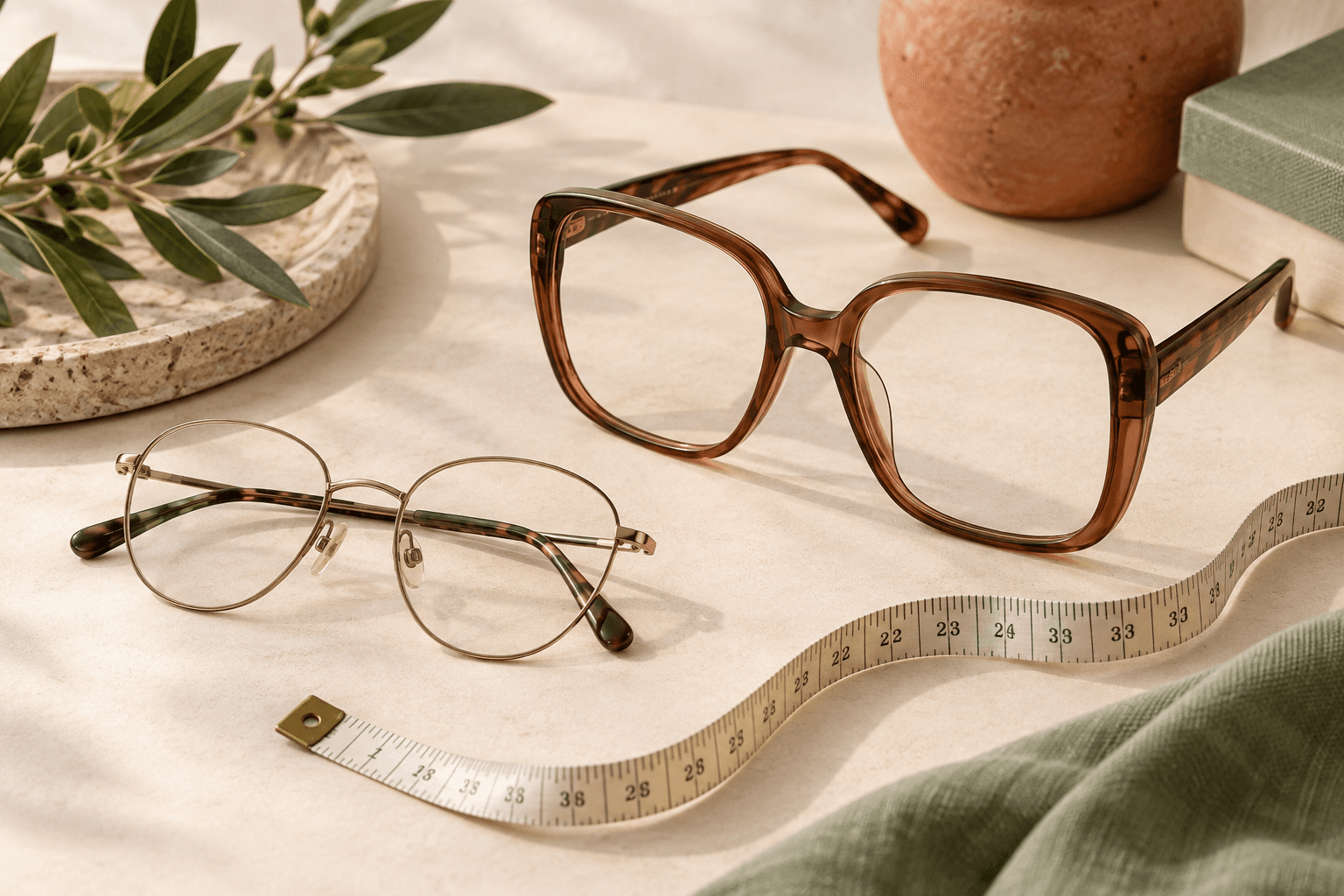
For your shortlist, ask for total frame width if it is missing. Place your existing glasses beside a ruler for a useful reference photo. Treat home measurements as approximate comparisons; a millimetre guessed from a tilted photograph should not decide the purchase.
Make visual weight a separate choice
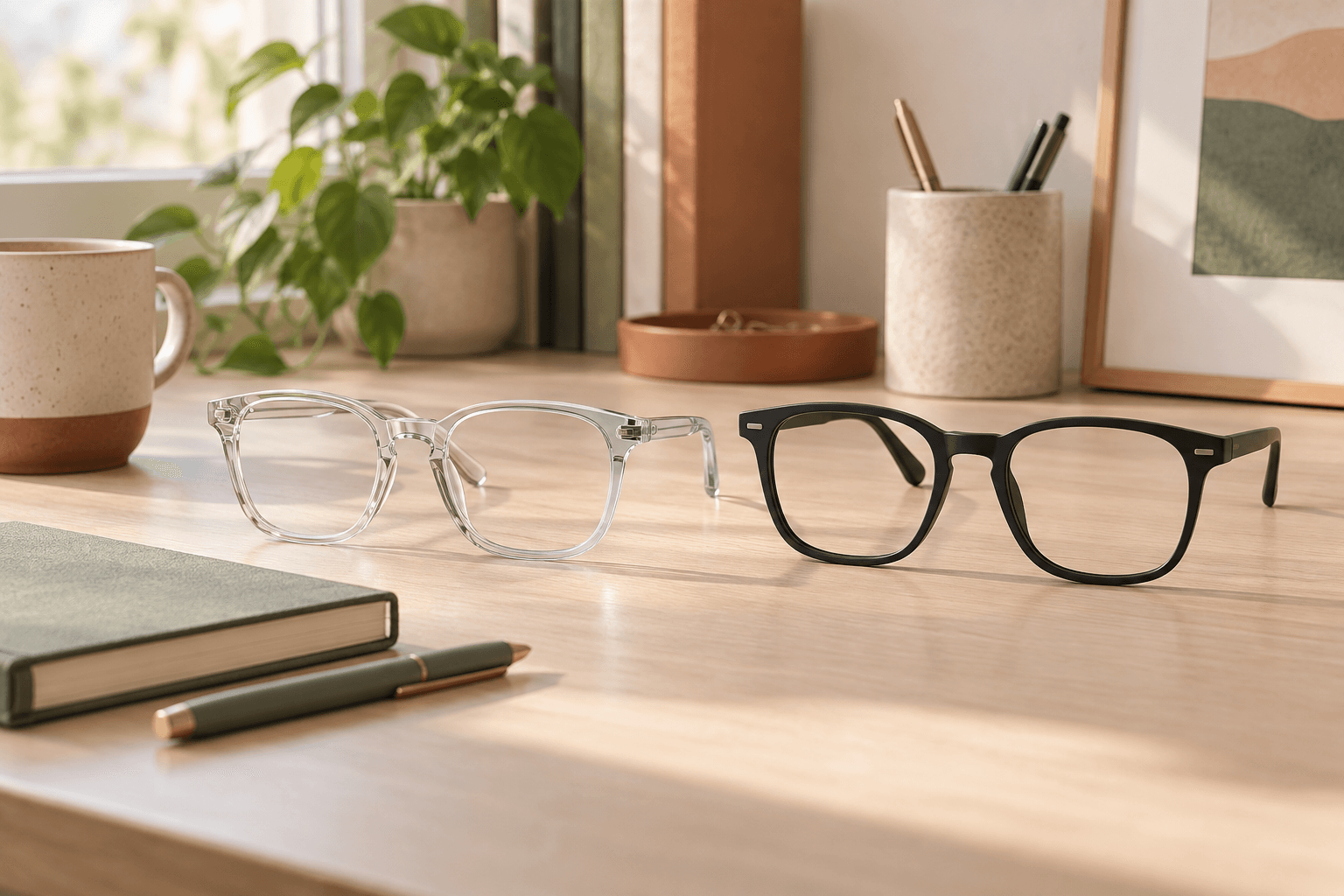
Imagine three frames of similar width: a thick black square, a fine metal rectangle and a translucent rounded shape. The black frame creates a strong outline; the others may feel quieter in the mirror. That is an aesthetic difference, so choose the presence you enjoy rather than assuming a small face must disappear behind nearly invisible glasses.
If a chunky frame feels overwhelming, try a less deep version before abandoning the colour. If thin frames feel timid, look for a defined upper rim. Change one feature at a time so you can tell what improved the result.
Do a normal-day comparison
Wear the shirt, kurta or scarf you would normally take to work or university. Look at the frame from conversational distance, then sit at your desk and glance down at your phone. For an in-person fitting, notice whether you keep reaching to reposition it. These ordinary moments tell you more about your preference than a carefully angled selfie.
Specsavers offers smaller and alternative fits with changes to eye and bridge sizing, a useful reminder that fit involves several dimensions. If a frame needs constant correction, ask an optician whether adjustment or a different design is the sensible next step.
Ask a more useful question before ordering
Instead of sending only “Will this suit a small face?”, send the model you like, your existing measurements and one specific concern. For example: “My present frame feels comfortable but looks too tall. Is this design shallower, and what is its full width?” A retailer can answer a concrete comparison more clearly than a broad face-size description.
Keep two or three candidates. Use online try-on for a first impression of shape, then return to the physical measurements and purchase terms. A convincing preview is still a preview, especially when bridge comfort is the issue you are trying to solve.
Leave room for a frame with personality
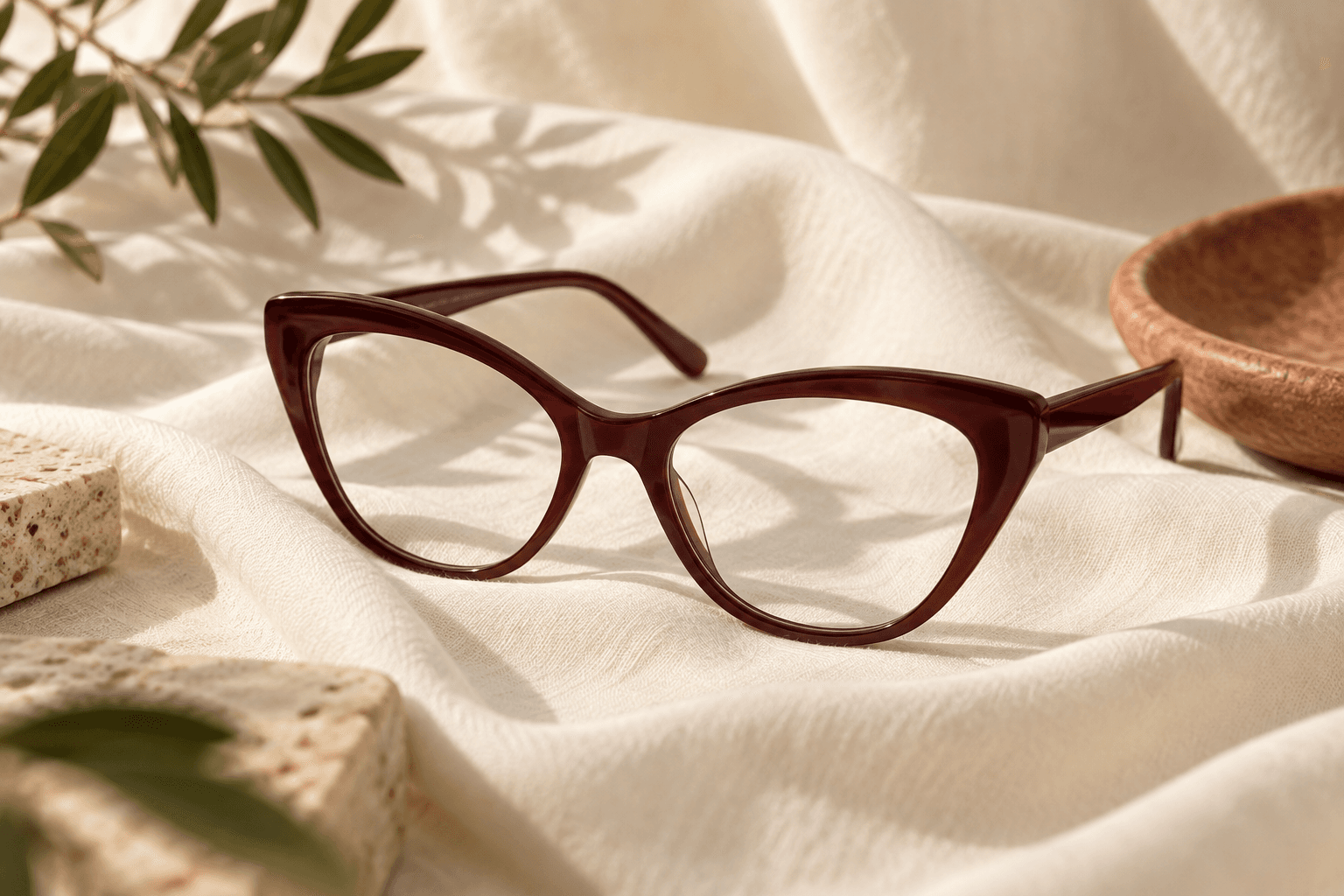
Your shortlist does not have to consist entirely of miniature black rectangles. A compact cat-eye, rounded frame or subtle colour can be a daily pair. In a Bangladesh wardrobe that moves between casual cottons, office clothes and family occasions, a shape you genuinely like often earns more wear than the one selected solely from a size chart. Choose the design you want to put on, provided its real fit supports that choice.
Quick questions
Should I buy children’s glasses if I have a small face?
Do not make that your automatic starting point. Compare adult frames with narrower fronts first. A children’s frame may have different proportions and arm lengths, so the age label cannot establish whether it fits you.
Is a small lens width enough to choose online?
No. Use it alongside the bridge, arm length and overall front width, and compare those with a comfortable existing pair. If a key measurement is missing, ask before committing to the order.